Only one man in a thousand is boring, and he's interesting because he's a man in a thousand.
~ Harold Nicolson
...
I live in a tropical country where we're blessed with abundant fruit all year round. In my house we always have a "hand of bananas" hanging in the kitchen, and it's exactly bananas that I want to talk about.
I sometimes have the privilege of traveling abroad, and whenever I do I'm always surprised by how different bananas taste! I've always assumed they were harvested while still green so they would survive the trip to wherever they were going rather than arriving already extremely ripe and mushy. I wasn't sure though, so I thought we might use this post as an excuse to find out what's actually going on.
I did some research1 and discovered something really interesting: a chemical called "ethylene".
Ethylene is not just any chemical, but a "gaseous hormone" produced by many plants as they grow. It turns out that many fruits (not all) have dedicated receptors for this chemical, and once they sense it in the air, the ripening process happens (magic ✨).
Not only that, but these fruits also produce a burst of ethylene when they're starting to ripen, so you can imagine this causes a cascade effect where one fruit starts to ripen, secretes ethylene, other fruits sense it and also start to ripen, and so on, until you have a tree full of beautiful, delicious mangoes.
Now it makes sense why they say you should never put a ripe apple together with green apples unless you want the latter to ripen faster.
It turns out that's exactly what they do with bananas when shipping them overseas: they pluck them from the trees while they're still very green (green bananas are a lot tougher than ripe ones) and ship them in climate-controlled containers so that their own production of ethylene is kept to a minimum (from what I understand, cold inhibits both the production and reception of ethylene, so our own fridges are basically doing the same as those climate-controlled containers).
Once they get to their final destination, they can either be stored for some more time or they can be put in special chambers where they are exposed to a controlled amount of ethylene, kickstarting the ripening process before they're sent to supermarkets so people like me can buy them and write blog posts about them.
What I still don't understand is why they taste different. Not only the taste, but also the texture is different. To me they usually feel like slightly unripe bananas (or papaya or whatever other tropical fruit). Maybe it has something to do with being harvested much earlier than those they sell locally? Or maybe getting the ethylene concentration right is not that easy? Or maybe (and this is probably more likely) they did some A/B testing and found that people there just like them more that way.
...
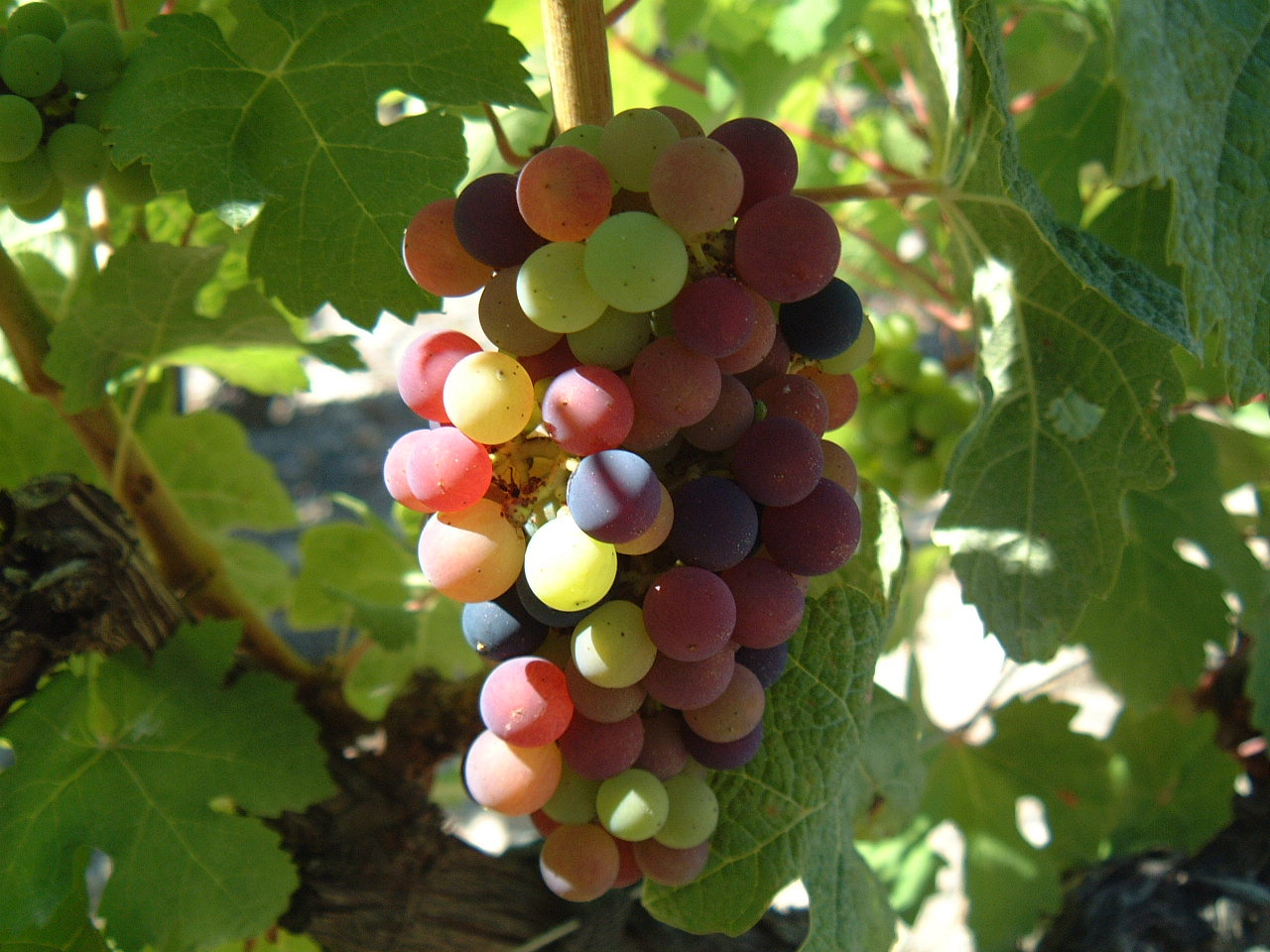
Something else I learned was that there are some fruits (called climacteric-apples, bananas, papayas, mangoes, avocados, etc.) that are sensitive to ethylene, and some others that aren't (creatively called non-climacteric-berries, grapes, olives, pineapple, citrus). An interesting fact is that these latter ones don't really ripen much after they're picked from the plant. Their main ripening mechanism depends on substances passed from the plant, meaning they ripen while attached to it.2
An interesting implication of this is that climacteric fruits all ripen at the same time, while non-climacteric fruits each ripen at their own pace. Wikipedia has a nice image that illustrates this point, showing a bunch of grapes all ripening at their own pace.
Thoughts:
- You've probably already seen it, but today I stumbled on a great music video that I wanted to share: I Work in a Warehouse. You can thank me later.
- I've been thinking that a straightforward antidote to being bothered by people you know reading what you write is to simply write much more than they can reasonably read! I doubt anyone I know is up to keeping up with what I post every day.
- My son sometimes comes up with the funniest questions. Today he asked me if I've recently read "the man of the rings".
- It took me a while to understand he meant "the lord of the rings". Fair mistake, I guess. Still, I chuckle when I remember it.